A shopping center parking lot can look fine from behind the wheel. But as you walk the property, you may notice parking lot safety issues such as a pothole near a busy entrance, faded striping, or the same low spot holding water after every storm. Those parking lot hazards matter when customers and vehicles are moving through the property all day.
At Turner Asphalt, we work with commercial and retail properties across the Southeast, including shopping centers. We’ve seen small parking lot safety issues turn into serious ones between property walks. Here’s what to look for before that happens.
How Parking Lot Hazards Can Create Liability Exposure
A damaged walking surface or poorly defined pedestrian route can make a busy shopping center harder to navigate safely. The same goes for parking lot safety issues such as standing water, accessibility concerns, or poor nighttime visibility.
From a pavement maintenance standpoint, what matters is how you respond when parking lot hazards need attention. Document what you found and what was done about it.
Liability standards vary by jurisdiction, and this isn’t legal advice — it’s our perspective as a pavement contractor. For questions about your property’s specific legal obligations, consult a qualified attorney.
Common Parking Lot Safety Hazards at Shopping Centers
Some parking lot hazards are obvious. Others are easier to miss until you walk the same paths your customers use. The National Safety Council parking lot safety guidance points to pavement defects, poor markings, lighting problems, and puddles among the conditions that can contribute to pedestrian injuries.
Here’s what tends to catch our attention:
- Potholes, Cracks, and Uneven Pavement: A pothole is easy to spot, but a sunken or uneven stretch of pavement can be easier to miss and still create parking lot trip hazards. Localized asphalt repair may address isolated damage, while recurring failures or alligator cracking can signal deeper deterioration.
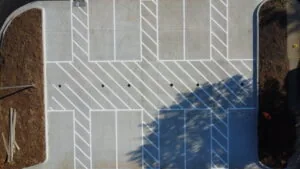
- Faded Striping and Poorly Defined Pedestrian Routes: Once crosswalks and directional markings start disappearing, a busy lot becomes harder to read. Clear parking lot striping and marking take the guesswork out of where drivers should go and where customers should cross.
- Poor Parking Lot Lighting and Visibility: The lot you inspect at noon can tell a different story after dark. Burned-out or obstructed fixtures can hide pavement hazards and make people on foot harder to see, especially around areas that stay busy into the evening.
- Standing Water and Drainage Problems: If the same puddle returns after every storm, we want to know why. Recurring ponding can interfere with normal use of the lot and may point to a problem that calls for parking lot drain repair.
- Damaged Curbs, Sidewalks, and Pedestrian Transitions: Pay close attention to where customers leave the parking surface and head toward the storefront. Damage along that route puts the problem directly in the path of foot traffic.
- Accessible Parking and ADA-Related Problems: Restriping is a good time to make sure the accessible route still works as intended rather than simply copying the old layout. Federal ADA parking lot requirements establish the applicable standards, while our ADA parking lot requirements explain what property managers should consider.
Parking Lot Safety Tips for Shopping Center Property Managers
Knowing the warning signs helps. The next step is deciding what gets handled now and what can wait for the maintenance plan. These parking lot safety tips can help you make that call.
Inspect the Parking Lot Routinely
Don’t make the windshield your only inspection point. A quick walk can reveal settlement, fading markings, or pedestrian-route problems that aren’t nearly as obvious from a vehicle. It’s also worth taking another look after severe weather or construction work has affected the property.
Prioritize High-Traffic Pedestrian Areas
A small defect near a busy storefront can deserve attention sooner than a cosmetic issue tucked away in a quiet corner. Let foot traffic help determine what moves up the maintenance list.
Address Small Pavement Problems Before They Spread
Don’t give minor pavement damage unlimited time to grow. Timely crack filling or localized patching can help address smaller defects, but the right repair depends on what’s causing the damage and how far it has progressed.
Keep Pavement Markings Visible
Don’t wait until traffic markings are barely recognizable. Refresh them before drivers have to guess where a lane ends, or a pedestrian crossing begins, with particular attention to markings that control traffic or define accessible areas.
Fix the Cause, Not Just the Visible Damage
If the same pothole, crack, settlement, or ponding keeps coming back, another surface repair may not solve it. When we see recurring failures, we look for underlying drainage or base problems before recommending the next repair.
Keep Records of Inspections and Maintenance
Keep a simple record of what you find, when repairs are completed, and which areas continue to cause trouble. Photos can make it easier to track changes over time and give your pavement contractor useful context when a recurring problem needs another look.
When Does a Parking Lot Safety Issue Require Professional Repair?
When damage keeps returning after being repaired, or an issue starts spreading across the lot, routine maintenance may no longer be enough. That’s when it’s worth having the pavement evaluated before deciding what comes next.
At Turner Asphalt, we look at why the pavement is failing before deciding how to repair it. Our parking lot paving team can match the repair to the condition of your pavement, from targeted maintenance to more substantial work when the damage runs deeper.
Don’t let parking lot safety issues spend another season moving down the maintenance list. Bring us out to walk the property with you and get the right work moving.
FAQs
What are the most common parking lot hazards?
Potholes tend to get noticed first, but keep an eye on the rest of the lot too. Faded markings, standing water, poor lighting, and damaged walking areas can all create problems for people trying to get from their cars to the storefront.
How can shopping centers improve parking lot safety?
Stay on top of the basics and deal with problems based on how they’re affecting the property. A faded crosswalk in a busy area, for example, may deserve attention sooner than a cosmetic pavement issue far from regular foot traffic.
Can potholes and cracked pavement create trip hazards?
Yes. A pothole or uneven section of pavement can easily become a parking lot trip hazard for someone on foot. If you keep repairing the same spot, that’s usually a good reason to take a closer look at what’s happening underneath.
Why is parking lot lighting important for safety?
Think about how different the lot looks after the sun goes down. Good parking lot lighting makes it easier to see people, pavement changes, and the path toward the storefront, especially during busy evening hours.